2011 Outback vs. 2011 Honda CR-V | |
| The 2011 Outback and 2011 Honda CR-V are competitors in the small SUV/crossover market. When it comes to choosing the perfect vehicle for you and your family, you need to look at safety, engine design and overall value for your money. Both vehicles start at around $23,000 with AWD, but only the Outback comes with standard symmetrical AWD, Boxer engine design and is a IIHS Top Safety Pick. | |
 |  |
Safety - Don't pay more for life saving Symmetrical AWD |
| A car accident occurs every 14-seconds in the United States. When it comes to protecting you and your family, you want the safest possible vehicle for any road condition. The Subaru Outback comes equipped with symmetrical AWD as a standard feature. Symmetrical AWD is just as it sounds; it provides balanced power to all four wheels, all the time. The unique design provides better handling and control than part-time AWD systems found in the optional AWD system available in the Honda CR-V, which only sends power to the wheels ONLY when the vehicle senses slippage. This is why Subaru received the highest ranking of "Good" for front, side, rollover and rear crash tests conducted by the IIHS, and is ranked as an IIHS Top Safety Pick. The Honda CR-V received a marginal score for rollover. |
 |
How Subaru Safety Compares to Competitors |
|||||||||
|---|---|---|---|---|---|---|---|---|---|
Key:  Good Good  Acceptable Acceptable
 Marginal Marginal
 Poor
Poor | |||||||||
Small SUVs | Midsized Moderately Priced Cars | ||||||||
| Model | Front | Side | Rollover | Rear | Model | Front | Side | Rollover | Rear |
| 2011 Subaru Forester |  | | | | 2011 Subaru Legacy | | | | |
| 2011 Toyota RAV4 | | |  |
| 2011 Subaru Outback | | | | |
| 2011 Honda CR-V | | |  |
| 2011Toyota Camry | | | | |
| 2011 Nissan Rogue | | | |
| 2011 Nissan Altima | | | |
|
| 2011 Kia Sportage | | | | | 2011 Mazda 6 | | | | |
Small Cars | Midsize SUVs |
||||||||
| Model | Front | Side | Rollover | Rear | Model | Front | Side | Rollover | Rear |
| 2011 Subaru Impreza sedan and wagon | | | | | 2011 Subaru Tribeca | | | | |
| 2011 Toyota Corolla | | | | | 2011 Honda Pilot | | | |
|
| 2011 Honda Civic | | | | | 2011 Nissan Murano | | | |
|
| 2011 Mazda 3 | | | | | 2011 Mazda CX-9 | | | |
|
| 2011 Ford Focus | | |
 | | 2011 Toyota Venza | | | | |

| |||||||||
Driving Pleasure and Engine Size | |
| The balanced design of the Subaru Boxer engine works by having its pistons move from side to side, cancelling out each other's actions, like two boxers punching. This increases engine performance, reduces vibration, and reduces friction to allow the engine to last longer. This creates a smooth driving experience unsurpassed by the Honda CR-V on rough roads. The larger cabin and road clearance on the Outback makes for a smoother ride and provides more room for the driver and passengers. The Outback can hold 18.5 gallons of fuel, while the CR-V only holds 15.3, which allows it to go almost 100 miles further on the highway. For the money, the 2011 Subaru Outback is a more comfortable drive and goes further between fillips. | |
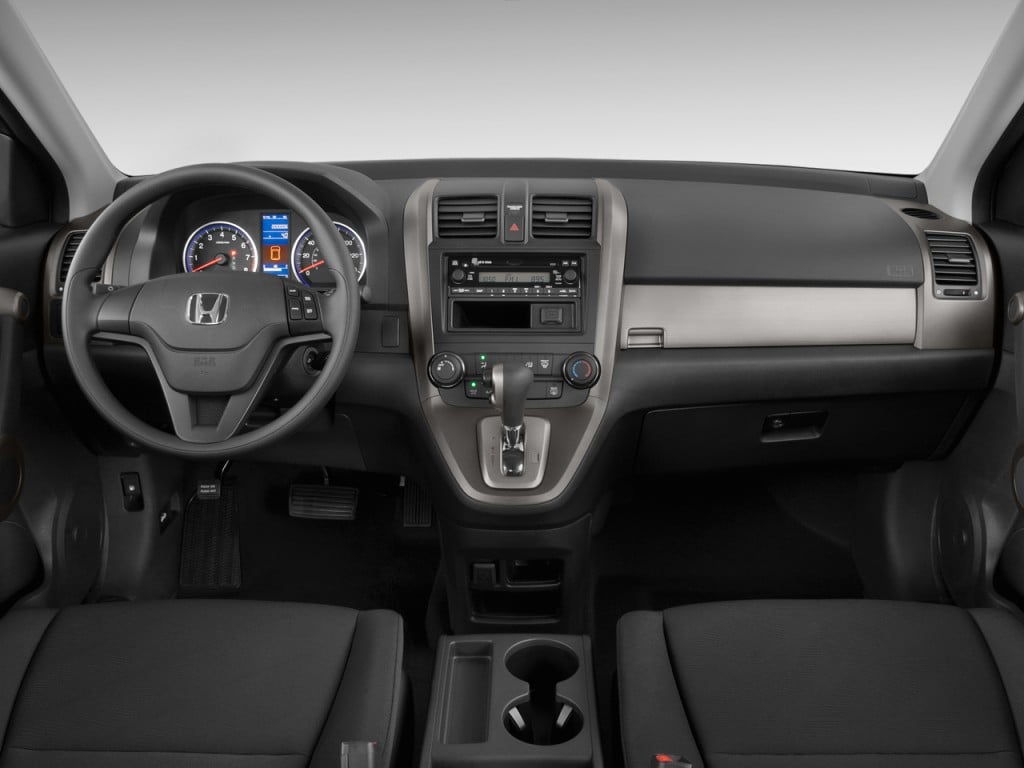
2011 Subaru Outback Interior | 2011 Honda CR-V Interior |
 |  |
With gas prices rising to $4 or more per gallon, it may seem that a smaller engine is the better option. Honda is known for its fuel-efficient 4-cylinder engine design that supposedly outperforms most other 4-cylinders in terms of fuel economy. However, the opposite is true. The flat 4-cylinder Subaru Boxer engine receives an EPA estimated 22/29 mpg city/highway, while the CR-V receives 21/27 mpg. Both engines are similar in size, but Honda's AWD system only works part time, receiving fewer miles per gallon than the full-time AWD system in the Subaru. If you want a more potent engine, the Subaru offers a 3.6-liter six-cylinder that provides plenty of get-up and go that drivers crave, without greatly sacrificing fuel economy. | |
 |  |
Miscellaneous
- The Subaru Outback received the highest score of "Good", while the CR-V received a score of "Marginal" on the IIHS roof crush test
- The Outback was given the award of "Top Pick" by the Insurance Institute for Highway Safety for its excellent safety features, while the CR-V never received this award
- Honda does not offer a "Partial Zero Emissions Vehicle" (PZEV) model for the CR-V, while the Outback does. PZEV is the standard on environmental friendliness and sustainability.
- The automatic transmission in the Subaru offers continuously variable transmission (CVT) with manual shifting mode, while the CR-V does not. CVT has no "steps" between gears, so it operates at peak performance, increasing fuel economy and acceleration when you need it, all the time.